Perplexity AI vs ChatGPT: Head-to-Head Comparison
Quick verdict
Winner: ChatGPT (8.6/10)
Best for: Rapid content generation and brainstorming marketing ideas.
At a glance
| Perplexity AI | ChatGPT | |
|---|---|---|
| Score | 8.4/10 | 8.6/10 |
| From | $20/mo | $20/mo |
| Free plan | ✅ | ✅ |
| Trial | — | — |
| Best for | Quickly gathering cited research for content ideas. | Rapid content generation and brainstorming marketing ideas. |
| Ease of use | Easy | Easy |
| Best use case | Rapidly source and synthesize information for marketing content. | Quickly generate diverse marketing content drafts and ideas. |
| Team size | Individuals to small marketing teams | Individuals to Enterprise |
| Learning curve | Low | Low |
Choose Perplexity AI if…
- Quickly gathering cited research for content ideas.
- Marketers needing fact-checked information fast.
- Generating initial drafts for blog posts.
Choose ChatGPT if…
- Rapid content generation and brainstorming marketing ideas.
- Drafting engaging social media posts and ad copy.
- Streamlining research for market trends efficiently.
Pricing comparison
- Perplexity AI: $20/mo
- ChatGPT: $20/mo
In the rapidly evolving landscape of artificial intelligence, two names frequently come up in discussions about advanced AI tools: Perplexity AI and ChatGPT. Both offer powerful capabilities to process information, answer questions, and generate text, yet their core design philosophies and optimal use cases diverge significantly. This head-to-head comparison aims to clarify which tool is best suited for various tasks, helping you decide whether to integrate one, both, or switch between them.
Quick Verdict
For users prioritizing research, verifiable facts, and real-time information, Perplexity AI stands out as the superior choice. Its unique strength lies in its ability to cite sources directly, offering transparency and enabling users to cross-reference information. It functions more as an ‘answer engine’ than a traditional chatbot.
Conversely, for general-purpose writing, creative brainstorming, coding assistance, or engaging in broad, open-ended conversations, ChatGPT remains the reigning champion. Its deep understanding of language models allows for highly coherent, context-aware, and creative outputs across a vast array of topics, making it the go-to for generative tasks.
Pricing Comparison
Both Perplexity AI and ChatGPT offer robust free tiers, alongside premium subscriptions that unlock enhanced features and capabilities.
Perplexity AI’s free tier provides access to its core answer engine functionality, including real-time web search and citation generation, albeit with some limitations on ‘Pro’ queries. The paid subscription, Perplexity Pro, typically costs around $20 per month (or an annual discounted rate). Pro users gain unlimited ‘Pro’ queries, allowing access to more powerful models like GPT-4 or Claude 2, advanced features like ‘Focus’ modes for specific search domains (academic, Wolfram Alpha, YouTube, etc.), and the ability to upload files for analysis.
ChatGPT’s free tier offers access to the GPT-3.5 model, which is highly capable for many common tasks but lacks real-time web browsing and the advanced reasoning of its successor. The premium offering, ChatGPT Plus, also typically priced around $20 per month, provides access to the more advanced GPT-4 model, real-time web browsing, DALL-E 3 for image generation, advanced data analysis capabilities, and access to a vast ecosystem of custom GPTs and plugins. For businesses, there are also ChatGPT Enterprise and Team plans with enhanced security and administrative features.
In essence, both platforms offer a valuable free entry point, with their paid versions significantly boosting performance and feature sets. The value proposition of each premium tier aligns with its primary use case: Perplexity Pro for deep, verifiable research, and ChatGPT Plus for broad, advanced generative AI capabilities.
Feature Comparison
The distinction between Perplexity and ChatGPT becomes clearest when examining their feature sets:
- Citations & Real-time Web Access: Perplexity AI’s most defining feature is its commitment to verifiable information. Every answer generated comes with direct links to its sources, allowing users to scrutinize the origin of the information. This makes it invaluable for academic research, journalism, or any task where factual accuracy is paramount. It inherently grounds its responses in live web data. ChatGPT Plus now offers web browsing, but its primary mode doesn’t always default to providing direct citations in the same manner as Perplexity.
- Generative Capabilities: ChatGPT excels in creative text generation, drafting emails, writing code, brainstorming ideas, scripting content, and more. Its strength lies in producing coherent, human-like text across diverse styles and formats. While Perplexity can summarize and generate text, its focus is on answering questions based on factual retrieval rather than pure creative output.
- Customization & Integration: ChatGPT, particularly with its Plus and Enterprise tiers, boasts a richer ecosystem of customization. Users can create custom GPTs tailored to specific tasks, and its plugin architecture allows for integration with a wide range of third-party services. Perplexity offers ‘Focus’ modes which allow for targeted searches within specific domains, but not the same level of broader integration or custom bot creation.
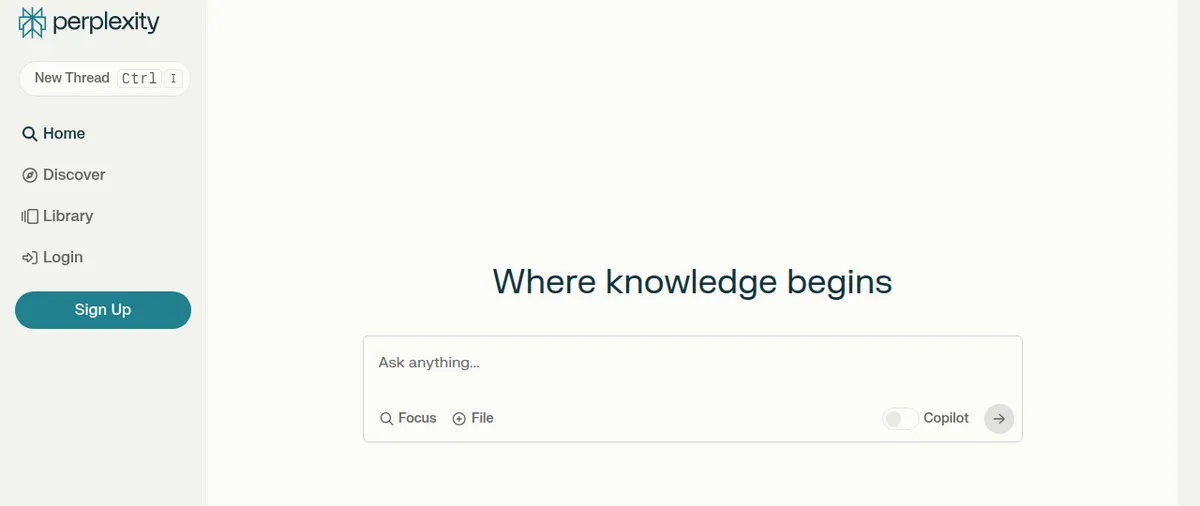
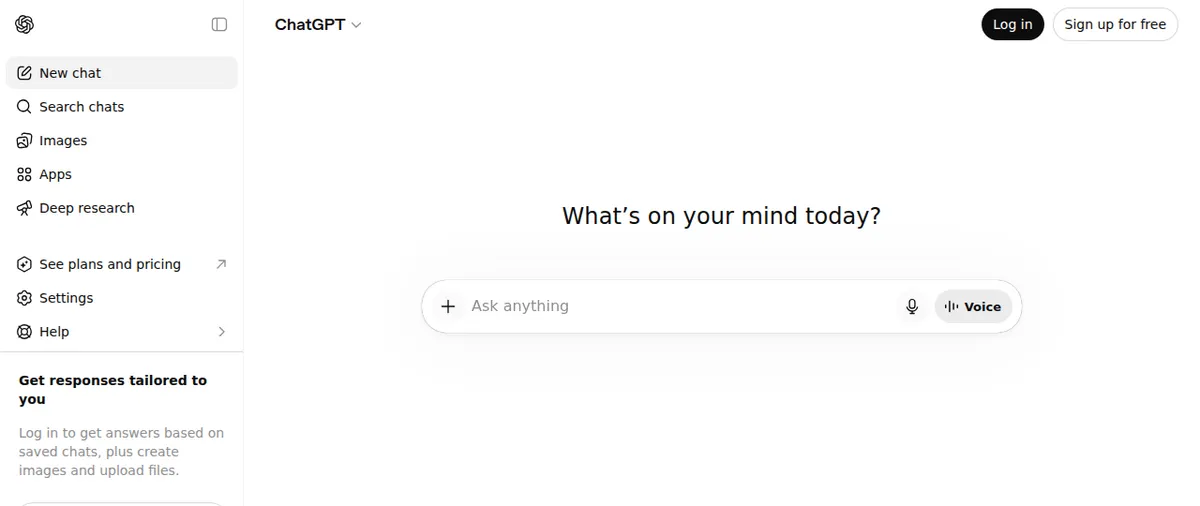
- User Interface & Experience: Perplexity’s interface is often described as cleaner and more search-engine-like, designed for quick, cited answers. ChatGPT offers a more conversational interface, encouraging back-and-forth dialogue and iterative refinement of responses.
- Underlying Models: Perplexity leverages a combination of its own models and frontier models from providers like OpenAI (GPT-4), Anthropic (Claude), and Google, choosing the best fit for specific queries. ChatGPT primarily uses OpenAI’s proprietary GPT series (GPT-3.5, GPT-4).
Switching Considerations
Deciding when to switch between Perplexity and ChatGPT often comes down to the immediate task at hand:
- Switch to Perplexity if: You need to verify facts, conduct in-depth research, generate reports with cited sources, compare different viewpoints from web sources, or stay updated with the latest information on a rapidly evolving topic. It’s ideal for students, researchers, content creators needing factual backing, and anyone who distrusts AI ‘hallucinations.’
- Switch to or Stick with ChatGPT if: Your task involves creative writing, drafting various forms of communication, generating code, brainstorming new ideas, summarising complex documents (without needing external citations for every point), or engaging in open-ended discussions where factual verifiability is secondary to conversational flow and creativity. It’s ideal for writers, developers, marketers, and general users seeking a versatile AI assistant.
Ultimately, many users find the most productive approach is to leverage both tools. Use Perplexity for your fact-finding and initial research, then transition to ChatGPT for content generation, refinement, and creative expansion based on the verified information. They are complementary tools, each excelling in distinct domains, and together they form a powerful AI toolkit for almost any digital task.
Frequently Asked Questions
Which is better for beginners: Perplexity AI or ChatGPT?
ChatGPT is generally better for beginners due to its broad utility and intuitive conversational interface, making it suitable for a wide range of simple tasks from asking questions to generating text. Perplexity AI, while easy to use, has a more specific focus on research and cited answers.
Which AI is better for teams: Perplexity AI or ChatGPT?
For teams focused on research, data analysis, or fact-checking, Perplexity AI is superior due to its verifiable citations and real-time information access. For teams involved in content creation, coding, brainstorming, or diverse communicative tasks, ChatGPT (especially with its Team/Enterprise plans) offers greater versatility and collaborative features.
Which is better for SEO purposes: Perplexity AI or ChatGPT?
Perplexity AI is excellent for SEO research, competitor analysis, and generating fact-based content ideas with sources that can improve topical authority and trustworthiness. ChatGPT excels at generating diverse SEO content like blog posts, meta descriptions, and keyword variations, as well as assisting with content optimization and strategy brainstorming.
How do the free tiers of Perplexity AI and ChatGPT compare?
Perplexity AI's free tier offers full web search with citations, giving users a taste of its core strength in real-time information retrieval. ChatGPT's free tier provides access to the GPT-3.5 model, which is powerful for general tasks but lacks direct real-time web browsing, DALL-E 3, or advanced data analysis available in its premium version.
Which AI is better for coding assistance: Perplexity AI or ChatGPT?
ChatGPT is significantly better for coding assistance due to its extensive training on code datasets, making it proficient in generating, debugging, explaining, and refactoring code across multiple programming languages. While Perplexity can answer coding-related questions, its primary strength isn't complex code generation or debugging.
We earn commission on purchases through our links at no cost to you. Learn more.