Research
Consensus: Best AI Research Tool for Writers?
Workflows Consensus appears in
Best for
- Researchers and academics doing literature reviews
- Clinicians searching for evidence-based answers
- Journalists needing peer-reviewed citations
Not for
- Limited to indexed academic sources
- Pro plan needed for advanced study analysis
- AI synthesis can oversimplify nuanced fields
Pricing
From: $9/mo
Free plan available See full pricing →Key features
- Search over 200M+ peer-reviewed papers
- AI synthesis of yes/no/mixed for research questions
- Citation-grounded answers with source links
- Consensus Meter for question consensus
- Study quality scoring
- GPT-4-class study analysis (Pro)
Limitations
- Limited to indexed academic sources
- Pro plan needed for advanced study analysis
- AI synthesis can oversimplify nuanced fields
- Doesn't replace deep methodological review
What it is
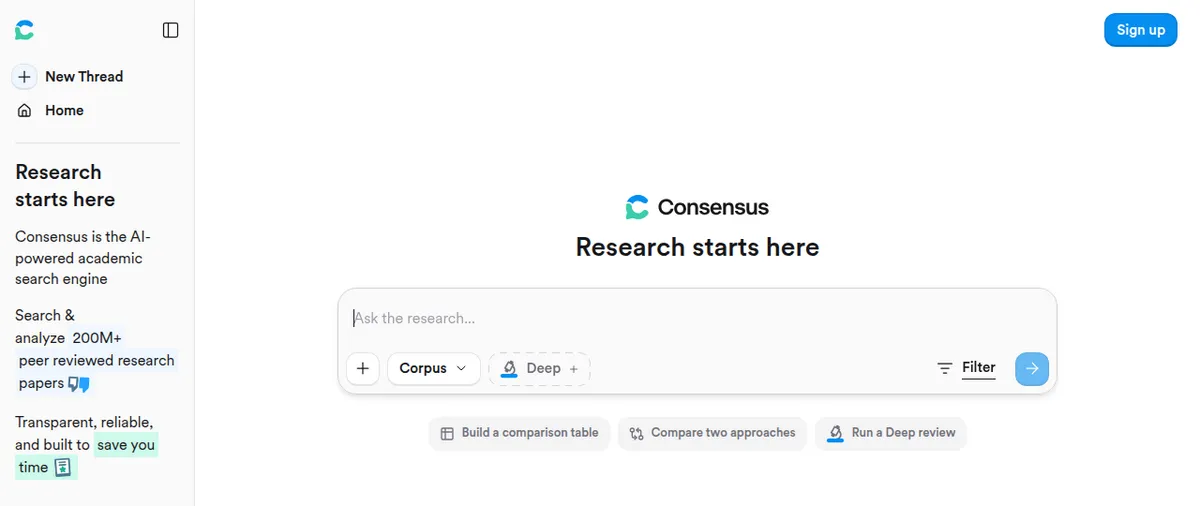
Consensus is AI-powered search restricted to peer-reviewed academic literature. Ask a research question, and instead of getting blog posts and SEO content, you get evidence-backed answers synthesized from actual studies, with citations to each source paper.
What it does well
The credibility-by-construction is the point. For “does intermittent fasting work?” or “is screen time bad for kids?” Consensus surfaces papers, summarizes findings, and shows a consensus meter — instead of giving you SEO-optimized opinion pieces. For researchers, clinicians, and serious journalists, this is a meaningfully better starting point than open-web AI search.
Where it falls short
Indexed academic sources are not the whole research landscape — grey literature, working papers, and field-specific repositories sit outside Consensus. AI synthesis can oversimplify nuanced fields where studies disagree on methodology. Always read the cited studies; don’t trust the synthesis alone.
Who it’s for
Researchers doing literature reviews, clinicians searching for evidence-based answers, journalists needing citations to peer-reviewed work, and students doing serious academic research. For general open-web research, Perplexity is the broader fit.
Stacks that include Consensus
Frequently Asked Questions
How is Consensus different from Perplexity?
Perplexity searches the open web; Consensus only indexes peer-reviewed papers. For research credibility Consensus wins; for breadth Perplexity wins.
Does Consensus replace Google Scholar?
For finding evidence-based answers to specific questions, yes. For comprehensive literature reviews or citation tracking, Google Scholar still has the larger index.
How reliable is the Consensus Meter?
A useful signal but not definitive. Always verify by reading the cited studies — the meter reflects what indexed studies say, not field consensus.
Is the free plan useful?
Yes — basic search and Consensus Meter included. Pro at $8.99/mo unlocks advanced filters, GPT-4 study analysis, and unlimited queries.
Can Consensus answer non-medical questions?
Yes — covers any field with peer-reviewed literature. Particularly strong in medicine, psychology, economics, and ecology.
We earn commission on purchases through our links at no cost to you. Learn more.